By Francisco Gallegos
Interrupt day 2: Agents in action
The second day of the Interrupt conference shifted focus from technical fundamentals to real-world implementations. The presentations revealed a clear pattern: the sectors leading AI agent adoption are those that are data-intensive and have large user bases. Banks, telecommunications companies, logistics firms, and software platforms dominated the presented use cases, showcasing implementations that handle massive interactions or highly complex processes.
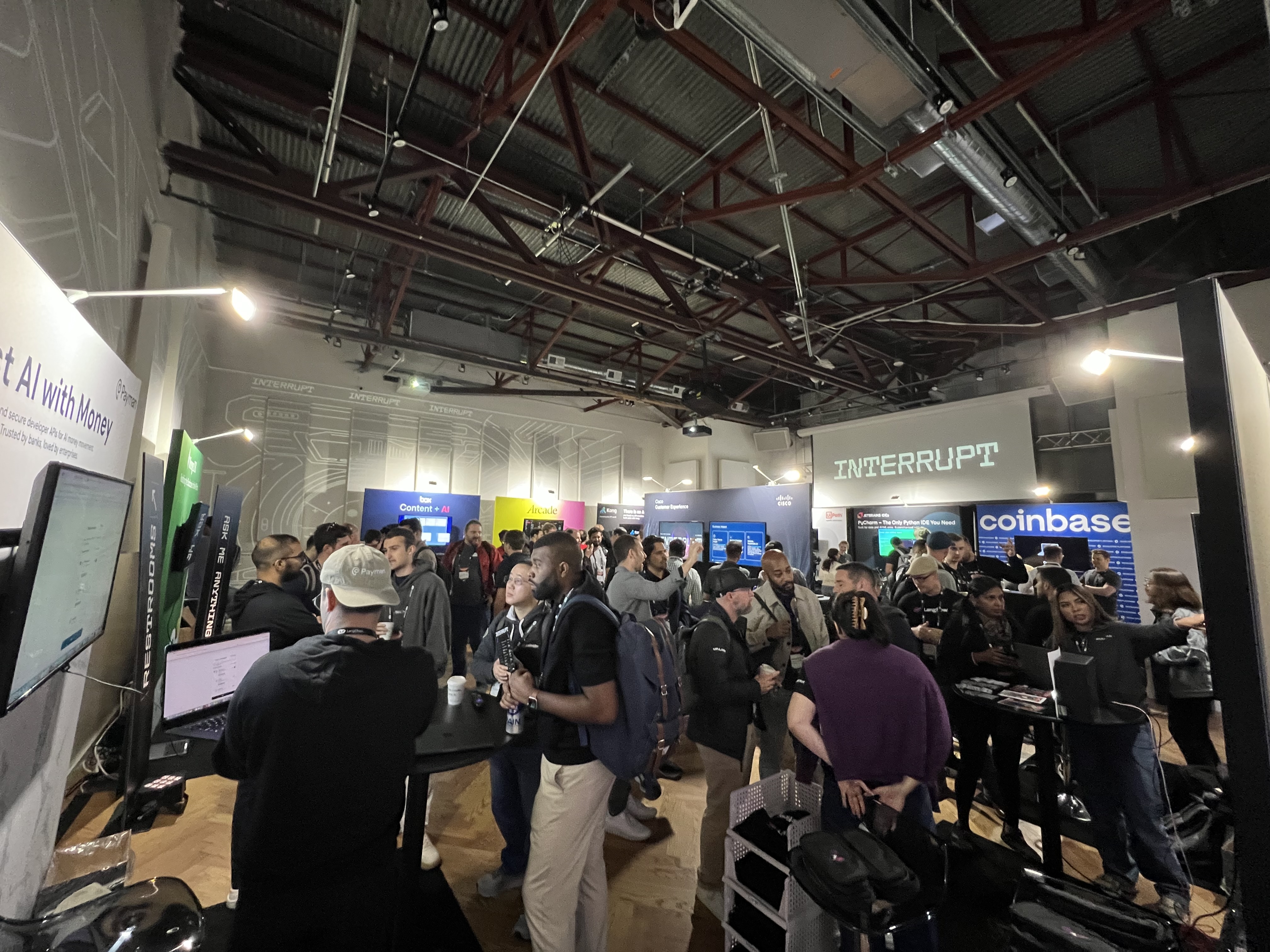
Meanwhile, the company and startup booths offered a fascinating complementary perspective on the ecosystem emerging around agent development. I was able to speak directly with creators of specialized tools: IDEs designed specifically for agent development, authentication and digital security services adapted for agents, platforms for API connections and MCP protocols, experimental generative interfaces, vector databases optimized for agent memory, and even deployed agent graphs that allow understanding of their logic and internal functioning. These conversations revealed a highly specialized tool ecosystem that is rapidly maturing to support the development and deployment of agents in production.
During the presentations, I noticed the absence of use cases in academia, scientific research, public sector, or environmental applications—areas where agents could have transformative impact. The trend continues: sectors with greater capital and commercial urgency continue to lead the development of cutting-edge systems, while areas of potentially greater social impact lag behind in adopting these technologies. However, the presented implementations offer valuable lessons on how to translate technical concepts into systems that actually work at massive scale. Below, I analyze the talks that best represent these emerging patterns and the fundamental challenges that agents face in production.
Experience and Precision
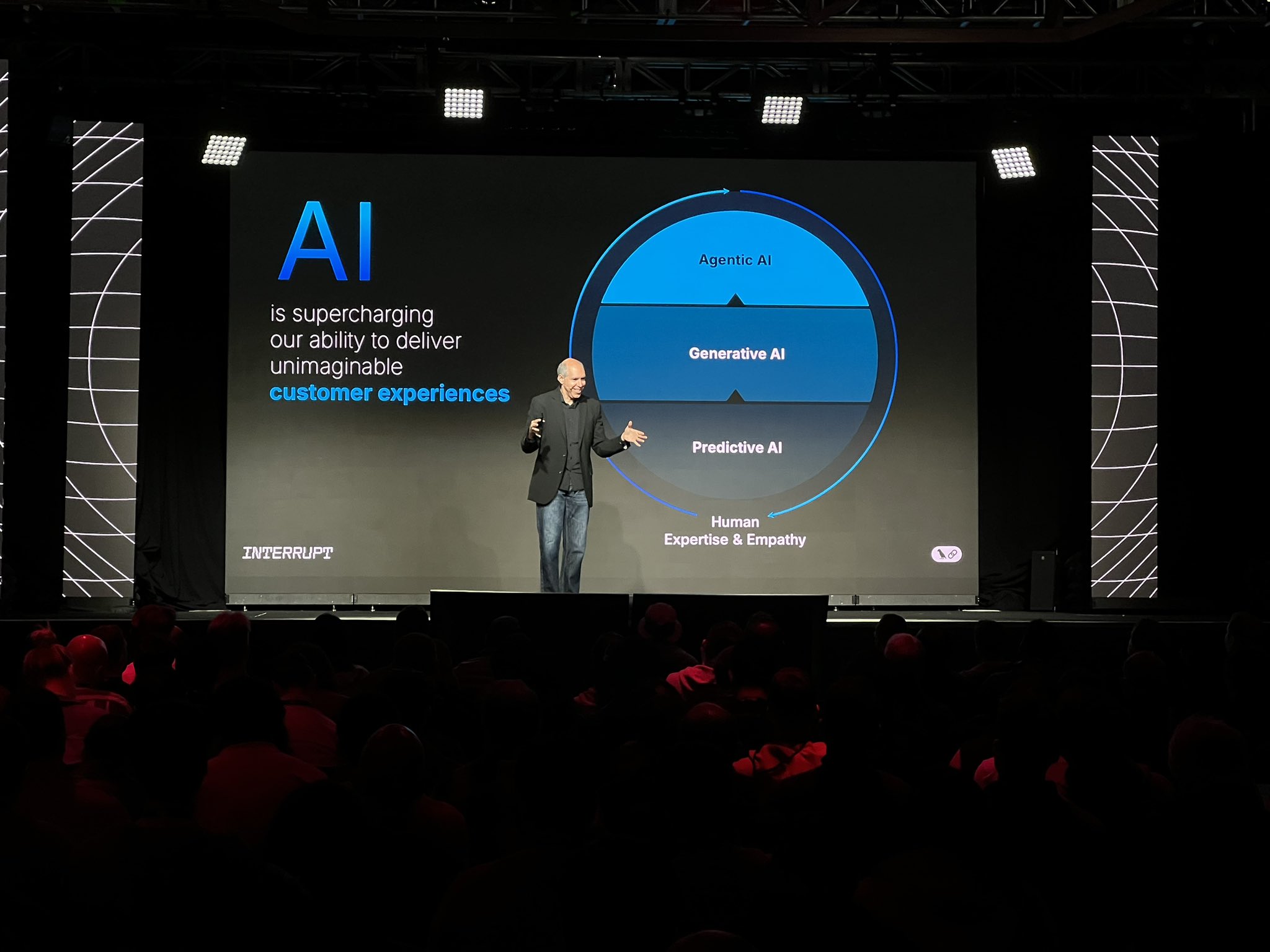
The presentations by Carlos Pereira from Cisco Systems and Zheng Xue from JP Morgan Chase perfectly illustrated how different industries approach agent implementation, but also revealed common patterns that go beyond the specific sector. Carlos described how Cisco uses agents to create customer experiences that he qualifies as "unimaginable" for traditional companies, while Zheng focused on agent systems for real-time investment decisions where millions of dollars are at stake.
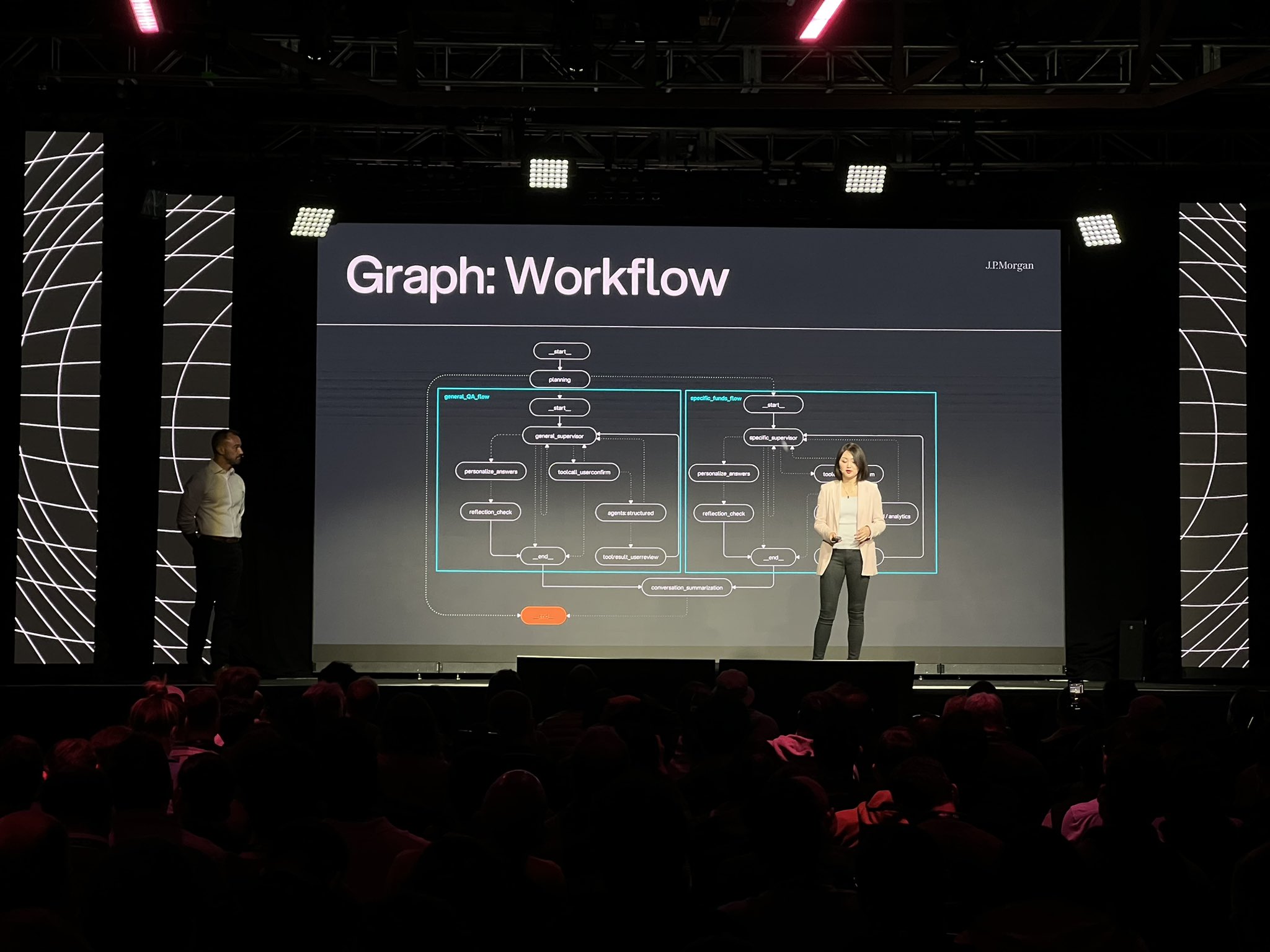
What's fascinating about both approaches is the architectural sophistication they require to function in production. Cisco has developed a structured framework to classify and measure the commercial value derived from their agents, using a multi-model stack that combines capabilities from Mistral, Anthropic, and Cohere according to the specific task. LangChain acts as the orchestration layer that allows these diverse agents to be deployed in a unified manner. Their examples include agents that handle contract renewals, sentiment analysis, or internal ML tools—each requiring different types of reasoning and information access. JP Morgan Chase, meanwhile, implemented a supervisor architecture in LangGraph where human participation is not optional but fundamental to system reliability. They have designed specific sub-agents for tasks like document search using MongoDB, and use LLMs as "judges" that evaluate decisions within the workflow as a reflection step before executing actions.
The most interesting convergence between both cases lies in their critical dependence on specialized ML models and database access tools, but above all in that both systems prioritize information quality and precision over response speed. Cisco emphasizes the importance of experimentation teams and "fast failure" as a development methodology, while JP Morgan Chase adopts the philosophy of "start simple and refactor frequently," defining clear metrics and using continuous evaluation-based development. Both approaches recognize that production agents cannot be experimental systems—they require robustness, observability, and crucially, the ability to explain their decisions to humans who maintain final responsibility for outcomes.
Agents as Developers
The presentations by Michele Catasta from Replit and Russell Kaplan from Cognition explored how these systems are transforming software development itself. Here, agents don't just process information but directly participate in writing, reviewing, and optimizing code, collaborating with developers in the creative process of software construction.
Michele shared Replit's experience in developing agents for full-stack code generation, systems capable of working fluidly both on new projects and connecting to existing repositories. Their approach prioritizes creating highly collaborative environments where developers and agents can work together transparently, always maintaining security as a fundamental principle. The platform allows agents to maintain continuity with previous work, adapting to project context and developer preferences. Russell, meanwhile, demonstrated how Cognition has developed specialized agents that work specifically with source code, focusing on complex contexts and very specific programming languages. Cognition's approach also emphasizes close collaboration between humans and agents, but from a more specialized perspective, where agents can understand existing architectures and make precise modifications that respect system conventions and limitations.