By Francisco Gallegos
Interrupt day 1: Agents 101
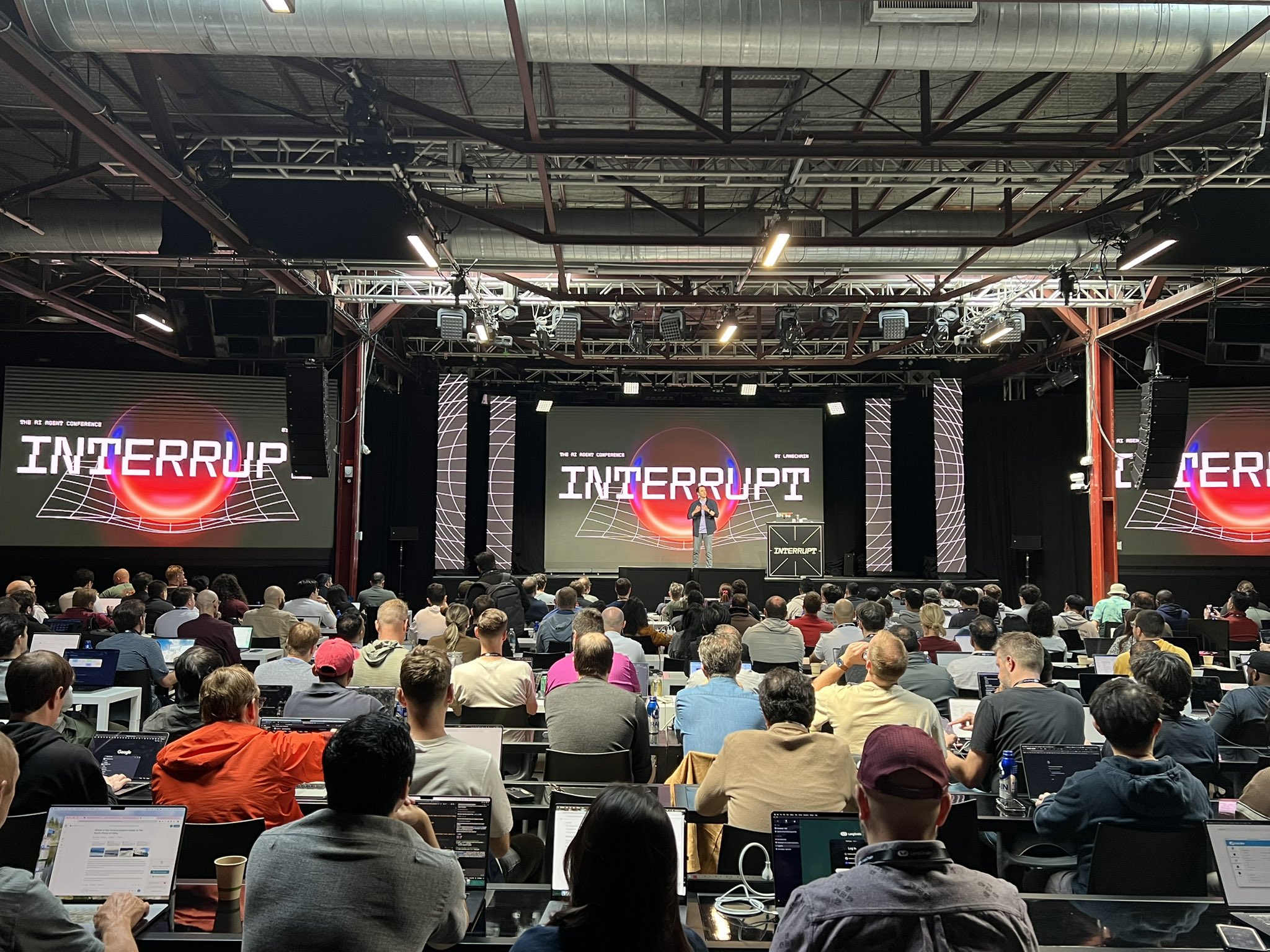
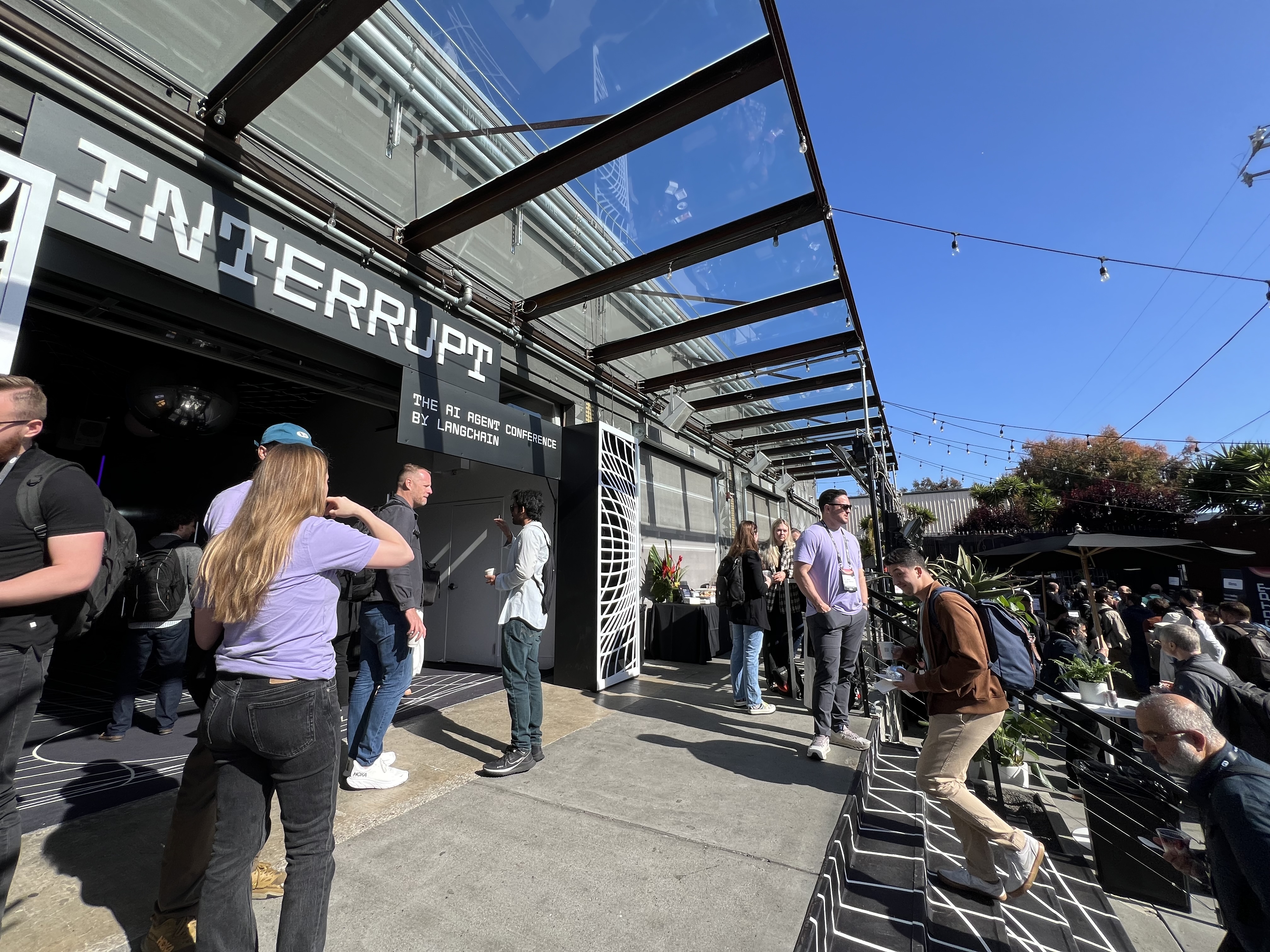
Walking into the Midway in San Francisco for LangChain's Interrupt conference, the first thing I noticed wasn't the technology everyone was discussing, but who was doing the discussing. The demographic composition was notable: predominantly North Americans and Europeans, with significant representation from Asians—particularly developers of Indian and East Asian origin. Over the two days of the event, I managed to chat or identify just eleven Latin Americans among nearly a thousand attendees. I estimate about 12% were women, a minority also reflected in the speaker panels, while most identified as AI developers, CTOs, CEOs, or tech startup founders.
This homogeneity isn't just a sociological curiosity—it matters because these are the people “defining” how AI agents will interact with the rest of the world.
When AI Stops Being Just Conversation
What exactly makes something an "agent" and not just another AI application? The difference is fundamental and worth explaining clearly. When you use ChatGPT or similar applications, you're essentially having a very sophisticated conversation with an intelligent calculator. You give it input, it processes the information, gives you output, and the only context is the conversation itself. It's impressive, but fundamentally reactive and what the development world calls "monolithic"—the entire process happens in a single closed block.
An AI agent represents a different conceptual leap. It's the difference between having an assistant who can only answer questions when you ask them directly, versus having a collaborator who can take initiative, plan, access memory or context, use tools, and execute concrete actions.
Imagine you're researching renewable energy solutions for rural communities. With a traditional monolithic application, you'd upload some academic papers, ask specific questions, and receive answers based only on that information; end of process. An AI agent would approach this completely differently. It could start by searching for current research on the topic, then identify which approaches have been successful in similar contexts, connect to databases of implemented projects, analyze relevant climate and geographic factors, and update or share information. All of this would happen in a coordinated way, with the agent maintaining the research thread, adapting to needs and tools to establish a complete workflow that involves humans in the exploratory or creative process.
The Five Pillars of Agentic Systems
During the first day's technical sessions, it became clear that effective agents need five components working in harmony.
First is orchestration—the ability to coordinate multiple steps toward a goal. An agent analyzing data doesn't just generate a report. It first decides what data it needs, then orchestrates a sequence: connect to the database, clean the information, identify patterns, cross-reference with external data if necessary, and maybe even decide what visualizations would be most useful for your specific context. This ability to plan and execute complex sequences is what separates an agent from a reactive tool.