The relationship between internet searches and suicide in Ecuador
PUCE
Team: Diana Mosquera, Francisco Gallegos, Nicolás Acosta
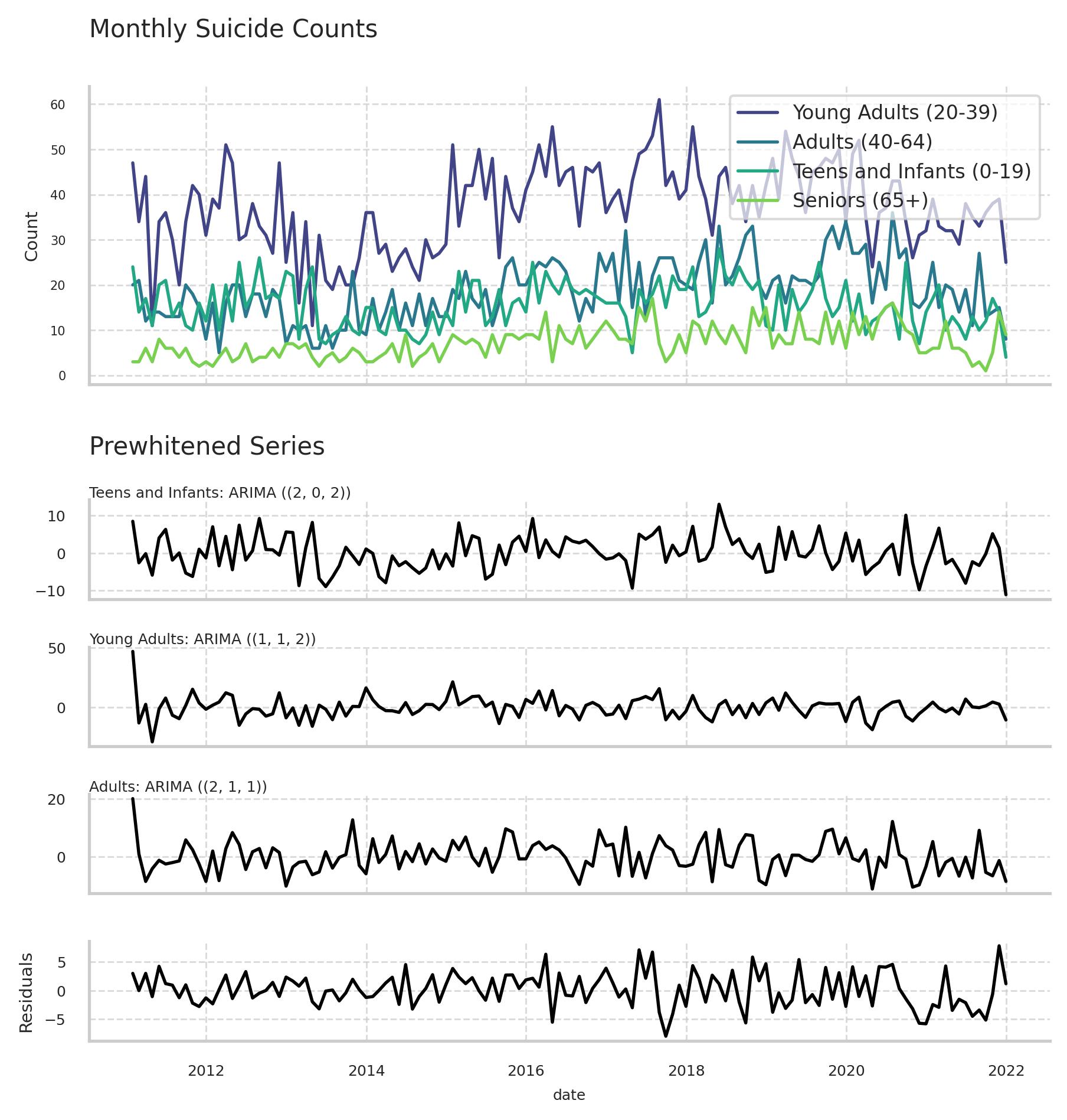
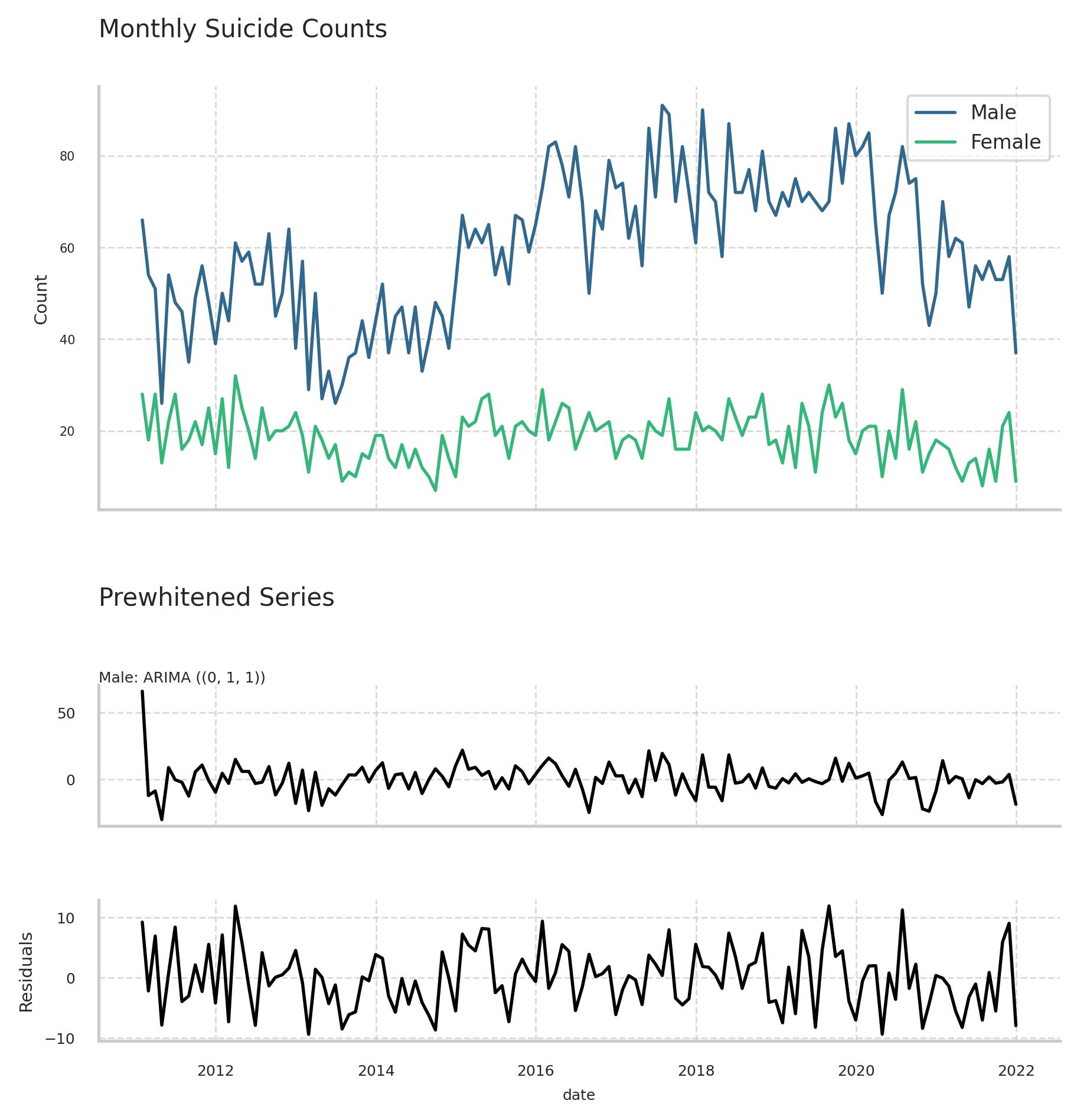
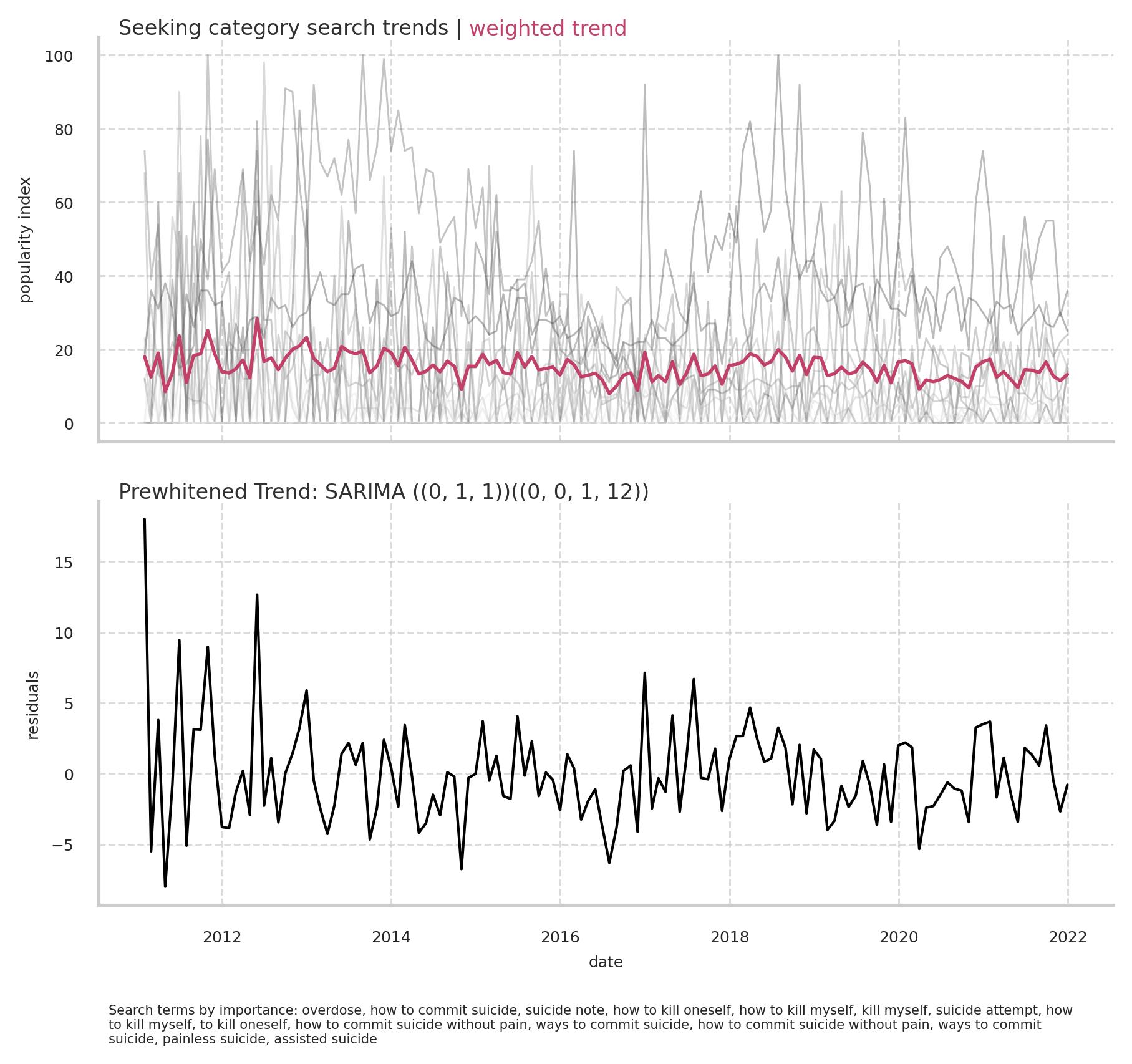
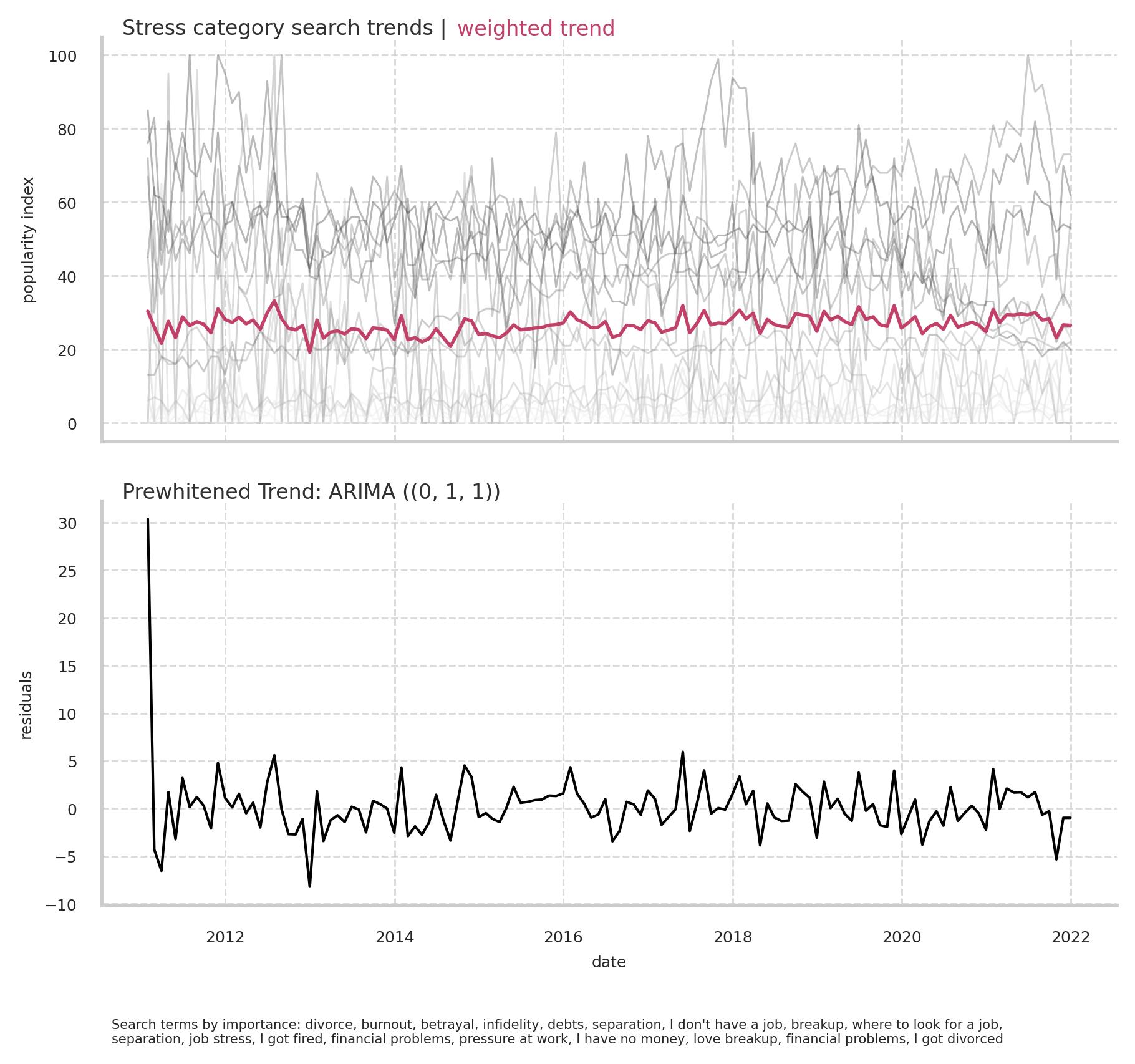
Our research, in collaboration with the Faculty of Economics at PUCE, presents an analysis of the relationship between Google search and suicide cases in Ecuador between 2011 and 2021. This study is the first of its kind in Latin America to examine how online search behaviors might correlate with actual incidents of suicide. A total of 131 suicide-related Google search terms were analyzed and grouped into nine categories: general, seeking, prevention, mood, disorders, stress, trauma, minorities, and digital violence. The last two categories -minorities and digital violence- were innovative additions to capture distinct search behaviors that might correlate with suicide. We employed time series analysis to remove autocorrelation and seasonal patterns, avoiding spurious correlations, and then used Pearson correlation and cross-correlation analysis to explore relationships between search trends and suicide rates. To enhance the analysis, we extended our investigation by examining three demographic characteristics: sex, age, and region. This approach revealed unique patterns and relationships specific to different population segments, providing valuable insights for targeted interventions.
The results revealed significant correlations between Google search trends and suicide rates in Ecuador. On average, Pearson correlation coefficients indicated a moderately positive correlation (0.35) between categories, suggesting that suicide cases increase in parallel with the frequency of certain search terms. The category “stress” showed the highest correlation (0.548), indicating that searches related to job uncertainty, financial problems, and relationship problems were closely linked to suicide cases. Other notable correlations were “prevention” (0.438) and “disorders” (0.435). Our cross-correlation analysis with 12 time lags clarified the temporal relationship between search tendencies and suicide cases. Surprisingly, in four of the nine categories, we observed a significant negative cross-correlation at the third lag (-0.191 on average), suggesting a complex relationship in which certain search activities might have delayed protective effects.