Integrating AI and Feminist Urban Design for the Evaluation of Public Spaces in Peripheries of the Global South
Université de Montréal
Team: Diana Mosquera, Francisco Gallegos, Juan Daniel Vásconez, Karla Mosquera, Ana Medina
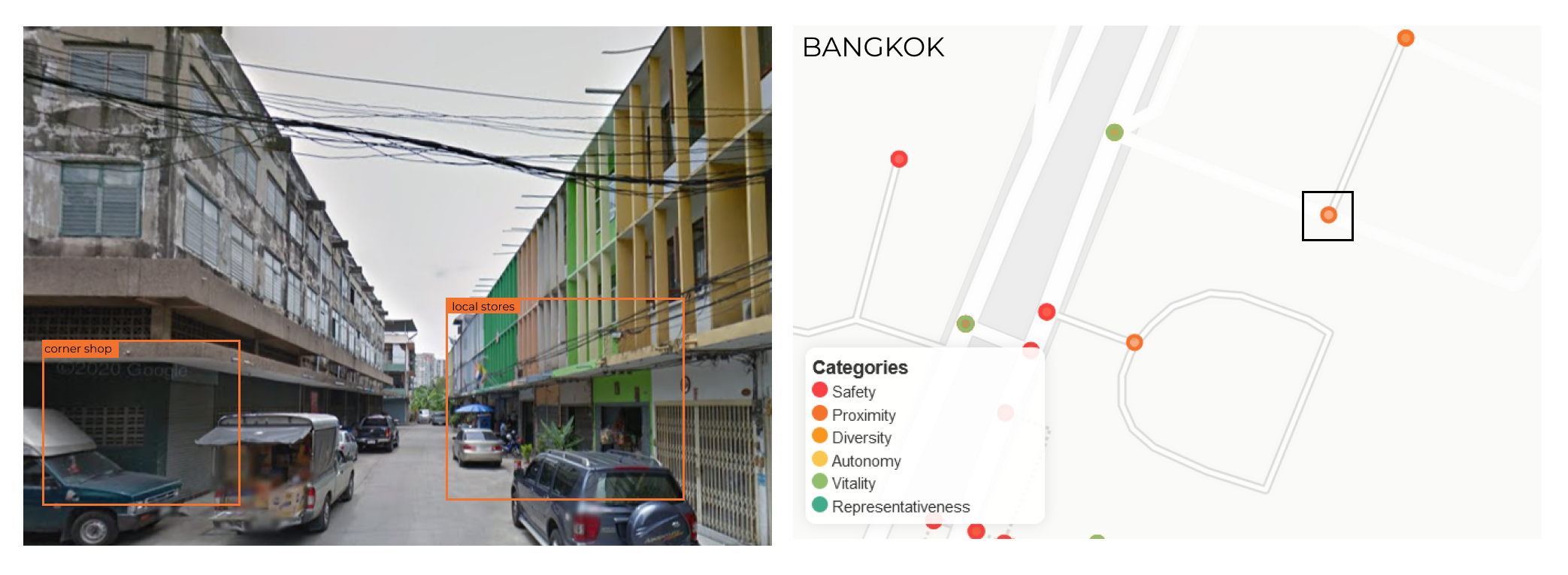
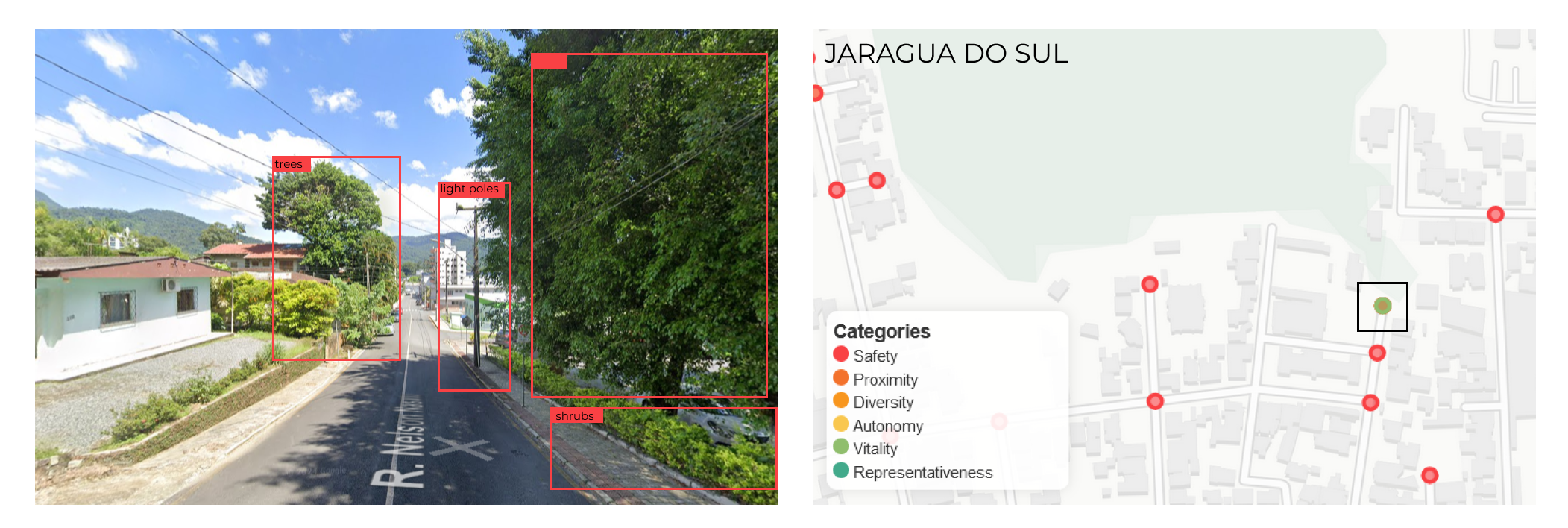
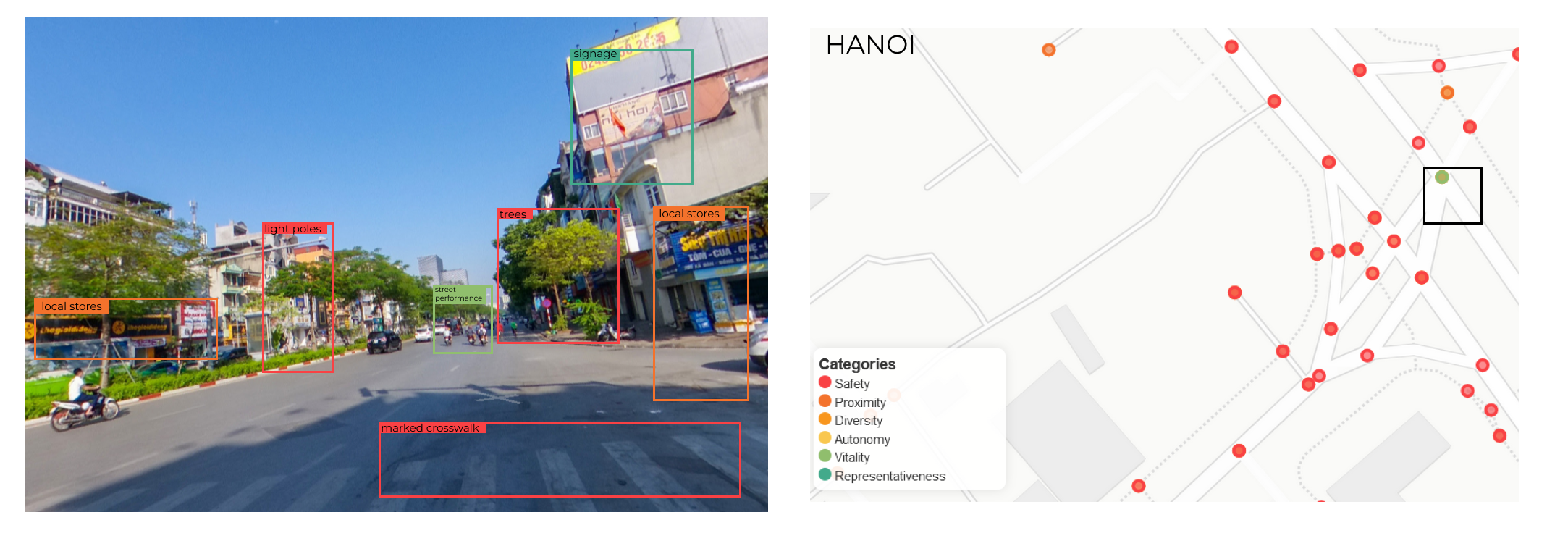
This research integrates artificial intelligence with feminist urban design principles to analyze perceptions of safety in public spaces in low-income suburban neighborhoods in nine medium-sized cities in South America and Southeast Asia. Urban safety remains a critical challenge for social minorities in the Global South, where despite increased investment, comprehensive tools to systematically analyze these issues are lacking. The study employs a methodological approach that leverages advanced AI technologies to analyze street-level imagery around bus stops in suburban neighborhoods. Using the Google Street View API, the research team collected images within a 350-meter radius of the bus stops, which were enhanced using the Real-ESRGAN super-resolution model. The YOLO-World object detection model was then applied to identify urban features, classifying them according to six feminist urban design principles: safety, proximity, diversity, autonomy, vitality and representativeness.
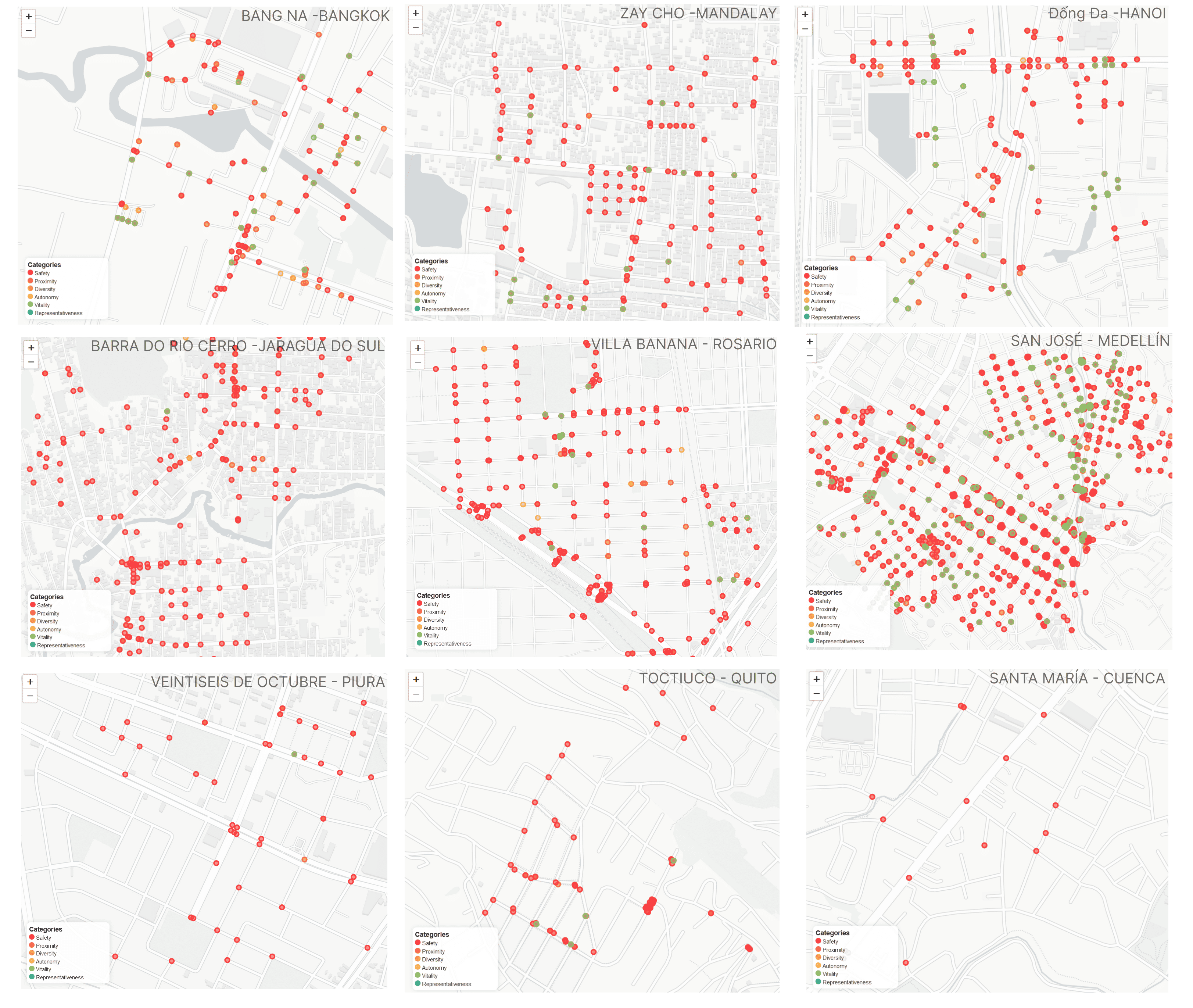
Analysis of over 22,000 detections revealed that safety-related elements dominated urban spaces with 56.4% of all detections, followed by proximity elements (22.5%), autonomy elements (9.7%), vitality elements (6.4%), diversity elements (4.9%), and representativeness elements (just 0.2%). This distribution indicates a strong emphasis on basic safety infrastructure, with significantly less attention to elements that support broader aspects of inclusive urban design. Significant variations were observed between cities. Medellín (Colombia) showed the highest concentration of urban characteristics with 6,904 detections and a more balanced approach to urban design compared to other cities. Southeast Asian cities showed distinctly different patterns: Bangkok presented the lowest proportion of safety features among large cities (36.3%), while exhibiting the highest percentage of proximity (27.0%) and autonomy (16.3%) features. In contrast, smaller South American cities showed extreme distributions, with 83.1% of security elements in Rosario (Argentina).
Regional differences were especially notable in the autonomy category, where Southeast Asian cities averaged higher proportions of autonomy-related items (11.3% in Hanoi, 16.3% in Bangkok) compared to South American cities (3.6% in Jaraguá do Sul, 2.6% in Rosario). Similarly, proximity elements showed a greater distribution throughout the urban fabric in Southeast Asian cities (average 23.4%) compared to the more concentrated patterns of South American cities along the main corridors (average 15.7%). The representativeness category proved to be highly underrepresented in all cities, never exceeding 0.4% of detections anywhere, suggesting a systematic gap in urban design approaches that address cultural and community identity through physical elements.