By Diana Mosquera
Underlying every generative AI trend
Over the past few years, several companies have launched artificial intelligence (AI)-based tools that, under the guise of entertainment, utility or viral trend, have collected huge amounts of personal data. What at first seems like a game or a curiosity-like seeing yourself aged, transformed into anime or a fantasy illustration-is actually part of a broader strategy to collect faces, metadata and digital habits. This massive collection has profound implications in terms of privacy, copyright and the environment.
FaceApp (2017)
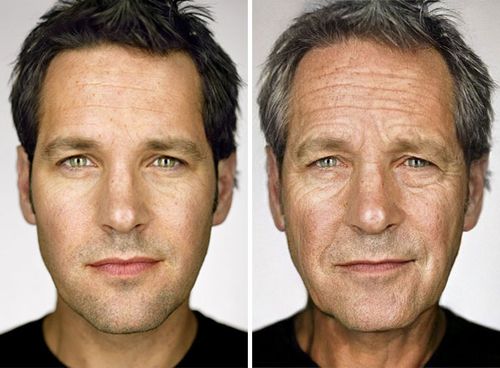
FaceApp, launched in 2017, is an application developed by FaceApp Technology Limited, a company registered in Cyprus. Its founder is Yaroslav Goncharov, a former Microsoft and Yandex engineer [1]. The app gained popularity for allowing users to apply aging, rejuvenating or gender changing filters on their faces. However, in 2019, strong questions arose about its treatment of personal data: the images were processed on external servers (Google Cloud and AWS), and although the company claimed that they were deleted within 48 hours, there was no mechanism to guarantee it [2].
Since its inception, FaceApp is estimated to have collected more than 150 million photos, and has admitted to using them to train facial recognition algorithms, develop new features, and refine its filters. Beyond these stated uses, the potential of these databases is immense: they could feed surveillance technologies, advertising, creating fictitious faces or even be exploited by government entities or malicious actors. In addition, the app also collects metadata such as geographic location and device model [2]. Other apps such as Aging Booth, FaceLab or YouCam Makeup have also collected millions of images through functions that appear to be purely recreational. Through facial simulations or aesthetic filters, users unwittingly deliver images to their devices that are not only recreational in nature, but are also used as a means to capture images of the user's face [3].
Clearview AI (2020)
Clearview AI is a US company whose facial recognition technology has been used by law enforcement and government agencies. Its database contains more than 30 billion images extracted from social networks and public sites without the consent of individuals. This practice has earned it multiple sanctions, such as the one imposed by the Dutch Data Protection Authority, which considered its activity illegal under the European Union's General Data Protection Regulation (GDPR) [3].
OpenAI and the Ghibli Trend (2025)
Recently, millions of people have uploaded their photos to platforms such as ChatGPT to transform them in the Studio Ghibli style. This viral trend has generated a new cycle of massive data collection, while replicating artistic styles without the recognition or consent of the original authors [5][6][7][8]. The use of Studio Ghibli's visual style poses a serious copyright conflict. To emulate the Japanese studio's aesthetics, soft colors, dreamlike landscapes and expressive strokes, AI models were trained with hundreds or thousands of images, without any agreement with their creators. This kind of technological appropriation devalues the artistic work accumulated over decades.
Moreover, these images are not only used for aesthetic purposes. The data collected allow the development of facial recognition systems, algorithms for generating realistic images, or new forms of personalization in advertising, entertainment and even surveillance [5].